

Posted on Thu, Aug 12, 2010 @ 02:04 PM
Functionally, there is no difference between a cut thread and a rolled thread. The difference enters in the manufacture of the bolt. Using 1” anchor bolts as an example the processes are:
Cut thread is created by a process that cuts away the steel from the round bar to form the threads. To cut thread, the process begins with a full 1” diameter round bar. The threads are cut into the round bar resulting in an anchor bolt with 1” diameter threads and a body of 1” diameter.
Rolled thread is created by a process that extrudes steel from the surface of the round bar to form the threads. To roll thread, the process begins with .912” round bar. The round bar is rolled through a set of dies that displace the steel to form the threads. The result is a bolt with 1” diameter thread and a .912” body.
Cut thread meets all ASTM specifications. Rolled thread meets ASTM specifications with the exception of A325 and A490. However, one thing to remember is that Architects and Engineers often specify cut thread for anchor bolts. Cut thread can always be substituted for rolled thread but the opposite may not always be true.

Posted on Wed, Jul 28, 2010 @ 11:14 AM
The world is becoming greener every day. This is a good thing but what does it mean to you when you have tons of steel to paint and have a tight schedule? You need to paint the steel and have it dry fast.
All paints contain volatile organic compounds (VOC). These are the chemicals that evaporate out of the paint as it is drying. In general, the higher the levels of VOC in paint the faster the dry time is. That’s good right? Not anymore. Volatile Organic Compounds have been found to be harmful to the environment and many states are now limiting them.
Under Federal (and State) regulations, paints for fabricated steel are considered “Industrial Maintenance” coatings. The Federal limit for these coatings is now 340 grams of VOCs per liter. That translates to 2.84 lbs. per gallon. States generally have the same limits but do vary.
This affects you because lowering the level of Volatile Organic Compounds can slow the drying time of your primers and coatings. Now what? First you need to know what your state regulations are. Then you need to know the VOC levels of the paint you use.
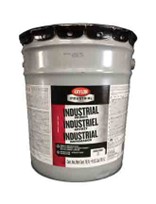
Pratt & Lambert has developed a line of basic shop coat primers that meet the new regulations but still offer effective drying times. Pratt & Lambert Red Oxide (SA4501) contains a maximum of 2.73 lbs. per gallon (327 grams per liter). Pratt & Lambert Shopcoat Gray (SA3102) contains a maximum of 2.76 lbs. per gallon (331 grams per liter).
Drying times vary based on temperature, humidity, light, etc. but are still relatively fast. Our customers report dry to handle times of 45 minutes to 1-1/2 hours. Not too bad.
For more detailed information about these regulations click the links below:
California
Connecticut
Delaware
Maine
Maryland
Massachusetts
Michigan
New Hampshire
New Jersey
New York
Ohio
Pennsylvania
Rhode Island
Virginia
US EPA
Posted on Tue, Jul 13, 2010 @ 10:22 AM
Ever been on the job, up high on the steel beams? Lunch time comes and you’ve got to go all the way down, grab a bite to eat and then all the way back up.
Well in New York City, DCM Erectors building One World Trade Center has the answer. As told in a New York Times recently published article, “For Ironworkers Up High, a Movable Feast,” a Subway restaurant franchise is housed in cargo containers and raised by cranes as the building goes up. The restaurant stays on the same level as the workers. They get food and an air conditioned space to eat it in up where they are working.
If you’ve been on this job, let us know how the Philly Cheesesteak is.
We’d also love to hear how you may have gone beyond the lunch pail and been creative for your meals.
Posted on Tue, Jul 06, 2010 @ 08:30 AM
We’re officially here, in the blogosphere.
Hello and welcome! Let us introduce ourselves to you. We are The Steel Supply Company. What is it that we do? Briefly we sell components that structural and miscellaneous steel shops use when they are fabricating or erecting.
That’s it. You get the gist. Want to know more? Visit our website which will tell you everything you need to know about the company, what we do and detail our products.
So what’s the blog for? We hope to bring people together in the steel industry. We all have one thing in common – steel. We all face similar problems and enjoy similar successes. We’ll answer commonly asked questions and when we don’t have the answer maybe someone out there will. We’ll bring you industry news. The information that’s out there will help us all understand the challenges we face in a changing economy. And for those who have known us for years, we may even bring some of our jokes to this space. The jokes have always been one of our most popular postcard mailings.
Most importantly, we want to hear from you. Anytime. We only ask that you be respectful of the space. Constructive criticism and comments are welcome. Please don’t say anything here that you wouldn’t say in public. We would appreciate that.
So, it is nice to meet you. If you have questions or comments, please ask. We’re listening.